Thursday, October 18, 2018

Thursday Blog: Week Six

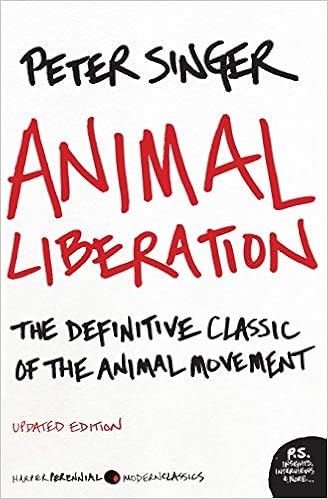
As I continue to read Animal Liberation by Peter Singer I have been able to answer the majority of my essential questions. This is most likely due to the fact that the book was originally published in 1975 and is said to be the book which started the animal rights movement. This book since its original publication has been revised to include new issues arising and also to include any improvements in the treatment of animals.

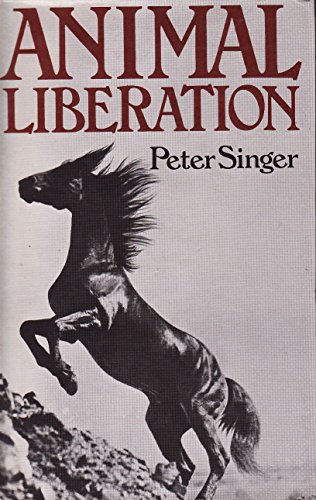
 Animal Liberation, 1975 edition.jpgAnimal Liberation: Singer, PeterImage result for animal liberation peter singerRelated image
Some of the book covers on this book throughout the years


The first essential question which I was able to answer was my question, what are animal rights. From even only the first few chapters Peter Singer makes his opinion on animal rights known. Much like the last book I read Singer also compares animal rights to human rights which makes the concept much easier to understand. At one point he says, "we would be on shaky ground if we were to demand equality for blacks, women, and other groups of oppressed humans while denying equal consideration to non-humans" (Singer 3). Adding the comparison between animals and oppressed groups gives me a lot of insight as to what animal rights actually are and what rights they deserve. Finding out about the oppression of animals led me to discover the organization below that works towards ending animal oppression.

                                                                                                 SURGE was Founded in 2016, Surge is a grassroots animal rights organization determined to create a world where compassion towards all non-human animals is the norm. Our aim is to spread awareness through large-scale campaigns, filmmaking and investigative work. Surge is committed to positive community building, teamwork and the abolition of animal use. Our vision is a world in which all animals are free from oppression and violence. (surgeactivism.com)


This book has begun to answer my question, are there any alternatives to animal testing. In the second chapter, they describe a “synthetic material called Eytex as a replacement for the Draize test” (Singer 59). The Draize eye test is a test where usually cosmetics are placed in the eye of animals such as rabbits and rodents. This is merely one example of an alternative way to test products that do not include animals.

angelfire.com
Eyetex
Eyetex uses a vegetable protein to mimic reactions of the cornea to a substance. This is an effective eye irritancy test that can replace the Draize eye irritancy test.
Testskin
Human skin grown in a sterile plastic bag is used to test for potentially harmful reactions.
Ames Test
A test culture is made of Salmonella bacteria and activating enzymes, along with the chemical to be tested. This method is extremely efficient at identifying carcinogens. In testing, it detected 90% of carcinogens and 88% of non-carcinogens. These numbers are impressively high compared to animal testing.

Singer, Peter. Animal Liberation. The Bodley Head, 2015.


Wednesday, October 17, 2018

Wednesday Blog: Week Six

In my search for connections to my topic in places other than in the books I am reading I came across the movie Blackfish. I haven’t watched this movie yet but I plan on watching it tonight. This movie is about Tilikum, a captive killer whale that has taken the lives of several people, underscores problems within the sea-park industry, man's relationship to nature, and how little has been learned about these highly intelligent mammals (wikipedia.org).  Here is the trailer to the movie.

Tuesday, October 16, 2018

Monday Blog: Week Six


This weekend I finished reading the book Rattling the Cage by Steven M. Wise but I still decided to write my blog on it because I have not read enough of my other book to analyze a quote. In the beginning of the book Wise constantly made connections between human rights and animal rights. The human right issues brought up in the book were abortion and slavery. In terms of abortion the book specifically talked about how if you are pro choice that you are taking away the rights of the unborn fetus. Wise later goes on to say that talking away rights from a unborn child is much like taking away the rights of animals. This is because neither of them can speak up for them sleeves. In respects to slavery Wise talks about involuntary servitude imposed on people before the civil war. He connect slavery to the way we use animals today and how we take advantage of them. The end of this book basically summarized the ideas previously introduced.

Image result for animal reproductive autonomy
Source: britannica.com
Quote: 
"The entitlement of [animals] to fundamental legal rights will mark a huge step toward stopping our unfettered abuse of them , just as human rights marked a milepost in stopping our abuse of each other"(Wise 237)
This quote basically compares the life of animals today to the lives of people before laws were passed to protect them and their rights. This quote also shows how Wise supports the idea that animals and people endure the same type of suffering, whether it be involuntary servitude or reproductive autonomy. By implying that the suffering endured by people and endure by animals is the same is one way Wise can appeal to a larger audience. This idea can appeal to those people interested in supporting other causes and therefore create a larger support for Wise’s position.
Image result for animal bill of rights
Source: livehonestly.com
As a high school student I fee like learning about current events and past events about human rights is very important. By implying that that animals and and humans both suffer from abuses of their rights has me very interested and I plan to learn more about the comparison between the two.I am not sure where I stand on believing that animals are equivalent to human slaves. Besides that, I agree that making a document that specifically states what Animals rights are and what protections they deserve that they would be treated far better. Personally, Wise's connection to human rights makes his position and ideas easier to comprehend because I have something to compare it against.
Image result for humanitarian animal rights and people rights
Source :quotemaster.org

Thursday, October 11, 2018

Friday Blog: Week Five

This week I have continued reading Rattling the Cage by Steven M. Wise pages 95 - 223. Since I am a week ahead in my reading I might be switching my final book to a longer one called Animal Liberation by Peter Singer, the author who I saw on Thursday night. This book is one of the most famous books in the animal rights movement and I feel like it would be beneficial to read it. Anyways, this week in my reading I came across a few words that I was unfamiliar with and found their definitions. 
Image result for animal liberation book
Source: www.petacatalog.com

Vocab

Exuberantly (Page 165)- Effusively and almost uninhibitedly enthusiastic; lavishly abundant.

Impoverished (Page 167)- Reduced to poverty.

Enculturation (Page 168)- The process whereby individuals learn their group's culture, through experience, observation, and instruction.

Aberrant (Page 174)- Departing from the right, normal, or usual course.

Hominids (Page 181)- Any member of the group consisting of all modern and extinct humans and great apes (including gorillas, chimpanzees, and orangutans) and all their immediate ancestors.

Gyrencephalic (Page 182)-  Denoting brains, such as that of humans, in which the cerebral cortex has convolutions, in contrast to the lissencephalic (smooth) brains of small mammals (rodents).

Metarepresentation (Page 196)- A higher-order representation with a lower-order representation embedded within.

Subordinate (Page 208)- Placed in or belonging to a lower order or rank.

Parsimonious (Page 214)- Characterized by or showing parsimony; frugal or stingy.

Quibble (Page 221)- An instance of the use of ambiguous, prevaricating, or irrelevant language or arguments to evade a point at issue.

Lexigram (Page 223)- A figure or symbol that represents a word.

Thursday Blog: Week Five

This week I have continued to read Rattling The Cage by Steven M. Wise. As I read more of the book it continues to legally support the animal rights movement. As I previously mentioned the book makes many legal comparisons between controversial topics that affect our lives today. Along with the engaging topics, the format of the book is very interesting as it will tell the reader to read ahead if they already agree with his opinion. 

Watch this video for more information on Steven M Wise and What his goals are for the Nonhuman Rights Project

Image result for nonhuman rights projectThis interesting format is seen on page 144 where Wise says, "If you agree, you may postpone all dental work and go directly to Chapter 9"(Wise 144). Because this book is a legal but also persuasive book this phrase used by the author is very clever. He implies that the pages ahead will be dull and painful much like dental work because he has to prove something that he thinks should be common knowledge. I feel like taking into consideration overall strengthens his persuasive ability and his ability to appeal to many different groups of people. 

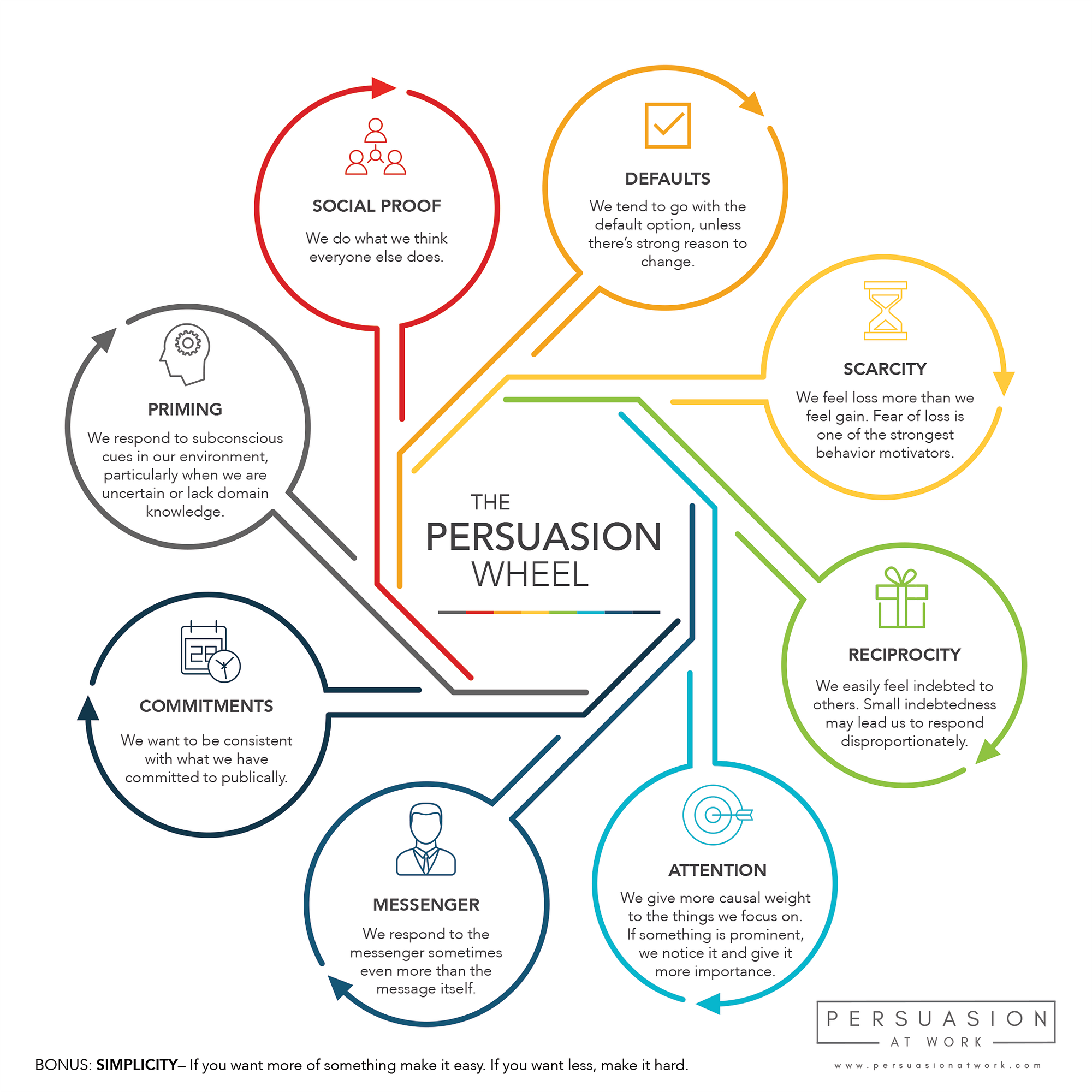
Image result for persuasion
Source: persuasionatwork.com

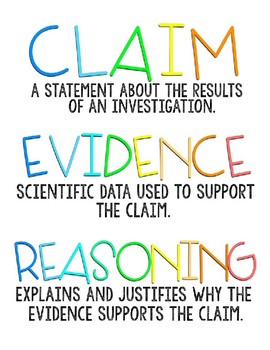
This book's main purpose is not only to persuade through his word choice but he also persuades readers by providing so much evidence to support his claims. throughout each chapter, he provides many cases to support claims such as animals being cognitive. After giving a brief explanation he will give many specific examples of cases both past and present that prove his claim to be correct. This "claim, evidence, reasoning", a method which is common in scientific reports is exactly what makes Rattling The Cage such a successful persuasive book. 
Claim, Evidence, Reasoning Scientific Explanations Poster
Source: ecdn.com


Wednesday, October 10, 2018

Wednesday Blog: Week Five

As I continue reading books around the topic of animal cruelty and animal rights I have begun to look into ways to connect with my topic in the real world. In my search to make larger connections I heard about  Peter Singer who is leading a discussion on Animals and Ethics, tomorrow night at Phillips Exeter Academy. I will be attending this event in hopes to learn more about the animal rights movement.
Image result for peter singer
Source: www.amazon.com

Tuesday, October 9, 2018

Tuesday Blog: Week Five

This week I have continued to read the book Rattling The Cage by Steven M. Wise. This book has been about making comparisons between the treatment of animals and controversial topics. Among the topics they cover they talk about abortion and slavery in a legal sense and how current laws impact everyday life.

Quote

 "the time to chisel the rights of nonhumans into the same constitutions in which human person-hood has been chiseled" (118 Wise)

Steven M.Wise stated an organization called the Nonhuman Rights Project which is " the only civil rights organization in the United States working to secure legally recognized fundamental rights for nonhuman animals" (www.nonhumanrights.org) This organization works towards securing rights for animals and people alike. This quote shows that Wise believes in the equal rights between animals and people and he thinks that they should be completely equal in a legal sense. through out the book he mentions how slavery is still on going but in different ways, with animals. This idea that animals are enslaved led Wise to think that animals deserve a legal document which clearly states their rights. If a document like this actually existed the rights for animals would finally be protected and they would no longer be used towards the benefit of humans.

Image result for steven m wise
Source: wordpress.com
I chose this quote becuase I think it’s a fascinating position to think that animals should have the same rights as people. The quote basically says that animals deserve to have some type of leagal document much like we have to write down their rights. The idea of animals having equal rights reminds me of a book I read where the animals over threw their masters. Although this book is a symbol for a abusive government, I still can’t help but to think about what would happen if humans and animals were equal. This idea has always fascinated me. I do think that Wise has a point when he says that animals deserve to have their rights specifically written down like we do.

Image result for animals welfare
Source: thought-of-animal.com