 |
| Source: www.amazon.com |
Wednesday, October 10, 2018
Wednesday Blog: Week Five
As I continue reading books around the topic of animal cruelty and animal rights I have begun to look into ways to connect with my topic in the real world. In my search to make larger connections I heard about Peter Singer who is leading a discussion on Animals and Ethics, tomorrow night at Phillips Exeter Academy. I will be attending this event in hopes to learn more about the animal rights movement.

Tuesday, October 9, 2018
Tuesday Blog: Week Five
This week I have continued to read the book Rattling The Cage by Steven M. Wise. This book has been about making comparisons between the treatment of animals and controversial topics. Among the topics they cover they talk about abortion and slavery in a legal sense and how current laws impact everyday life.
I chose this quote becuase I think it’s a fascinating position to think that animals should have the same rights as people. The quote basically says that animals deserve to have some type of leagal document much like we have to write down their rights. The idea of animals having equal rights reminds me of a book I read where the animals over threw their masters. Although this book is a symbol for a abusive government, I still can’t help but to think about what would happen if humans and animals were equal. This idea has always fascinated me. I do think that Wise has a point when he says that animals deserve to have their rights specifically written down like we do.
Quote
"the time to chisel the rights of nonhumans into the same constitutions in which human person-hood has been chiseled" (118 Wise)
Steven M.Wise stated an organization called the Nonhuman Rights Project which is " the only civil rights organization in the United States working to secure legally recognized fundamental rights for nonhuman animals" (www.nonhumanrights.org) This organization works towards securing rights for animals and people alike. This quote shows that Wise believes in the equal rights between animals and people and he thinks that they should be completely equal in a legal sense. through out the book he mentions how slavery is still on going but in different ways, with animals. This idea that animals are enslaved led Wise to think that animals deserve a legal document which clearly states their rights. If a document like this actually existed the rights for animals would finally be protected and they would no longer be used towards the benefit of humans. |
| Source: wordpress.com |
 |
| Source: thought-of-animal.com |
Friday, October 5, 2018
Friday Blog: Week Four
This week I continued to read Rattling the Cage by Steven M. Wise, pages 1- 95 I am currently a week ahead in my reading because I finished the previous book early. As I read the book I found a few words that I was unfamiliar with.
Vehemently (Page 13)-
Strongly emotional; intense or passionate.
Taxonomists (page 13)-
The science or technique of classification.
Imbecility (Page 19)-
An instance or point of weakness; feebleness; incapability.
Anachronism (Page 25)-Something or someone that is not in its correct historical or chronological time, especially a thing or person that belongs to an earlier time.
Primordial (Page 25)-Constituting a beginning; giving origin to something derived or developed; original; elementary.
Cuneiform (Page 27)-Composed of slim triangular or wedge-shaped elements, as the characters used in writing by the ancient Akkadians, Assyrians, Babylonians, Persians, and others.
Commensurable (Page 29)- Suitable in measure; proportionate.
Ecclesiastical (Page 35)-
Of or relating to the church or the clergy; churchly; clerical; not secular.
Syllogism (Page 67)-An extremely subtle, sophisticated, or deceptive argument.
Paradigms (Page 71)-A framework containing the basic assumptions, ways of thinking, and methodology that are commonly accepted by members of a scientific community.
Cohabitation (Page 85)- To dwell with another or share the same place, as different species of animals.
Vehemently (Page 13)-
Strongly emotional; intense or passionate.
Taxonomists (page 13)-
The science or technique of classification.
Imbecility (Page 19)-
An instance or point of weakness; feebleness; incapability.
Anachronism (Page 25)-Something or someone that is not in its correct historical or chronological time, especially a thing or person that belongs to an earlier time.
Primordial (Page 25)-Constituting a beginning; giving origin to something derived or developed; original; elementary.
Cuneiform (Page 27)-Composed of slim triangular or wedge-shaped elements, as the characters used in writing by the ancient Akkadians, Assyrians, Babylonians, Persians, and others.
Commensurable (Page 29)- Suitable in measure; proportionate.
Ecclesiastical (Page 35)-
Of or relating to the church or the clergy; churchly; clerical; not secular.
Syllogism (Page 67)-An extremely subtle, sophisticated, or deceptive argument.
Paradigms (Page 71)-A framework containing the basic assumptions, ways of thinking, and methodology that are commonly accepted by members of a scientific community.
Cohabitation (Page 85)- To dwell with another or share the same place, as different species of animals.

Thursday, October 4, 2018
Thursday Blog: Week Four
As I continue reading Rattling the Cage by Steven M. Wise I have begun to learn more about what animal rights really are. One of the main things this book has taught me about is the history behind the animal rights movement. Before reading the book I had never really thought that animal rights were something that has been long debated, but merely an issue which recently became a hot topic. Through Wise’s words, I have learned much of the history behind animal rights and that has led me to understand my essential question as to what animal rights really are.
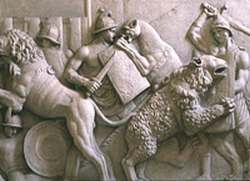
Within the first few pages of the book, it becomes clear that the book would cover both modern and previous issues around animal rights. The issues Wise discuss trace back to biblical times, Ancient Rome, and Ancient Greece many times. Before reading these passages I never really understood where the animal rights movement came from, but now I understand. One quote that “ Roman jurist Hermogenianus “hominum causa omne jus constitum” ("All law was established for men’s sake”) (Wise 24). That law is followed by an explanation the law was made for men and allows no fellowship or bonds of obligation between them and the lower animals. This showed me that even back then people were talking about where people and animals stand on a legal standard. The fact that thousands of years ago they were making these laws that the animal rights movement was started long before I had previously thought.
Within the first few pages of the book, it becomes clear that the book would cover both modern and previous issues around animal rights. The issues Wise discuss trace back to biblical times, Ancient Rome, and Ancient Greece many times. Before reading these passages I never really understood where the animal rights movement came from, but now I understand. One quote that “ Roman jurist Hermogenianus “hominum causa omne jus constitum” ("All law was established for men’s sake”) (Wise 24). That law is followed by an explanation the law was made for men and allows no fellowship or bonds of obligation between them and the lower animals. This showed me that even back then people were talking about where people and animals stand on a legal standard. The fact that thousands of years ago they were making these laws that the animal rights movement was started long before I had previously thought.
 |
| Source: explore-italian-culture.com
After reading about Ancient Rome and Animal rights I gained more comprehension of the entire movement in itself. I learned that it has always been a controversial topic, but I also learned that the level of animal rights being requested has steadily increased. In ancient times people did not want animals to have rights, the rights denoted to animals were simply that all animals are below humans. As time progressed, people began to push for some basic rights for animals, but still, humans were the main beneficiary. This stage of animal rights asked for compensation for damage to animals payable to the owners. Although it has been a slow progression towards where we are today, animal rights have been evolving for a very long time.
Here is a timeline of some of the things SPCA has accomplished during the time that the animal rights movement was evolving.    Source: sfspca.org |
Wednesday, October 3, 2018
Wednesday Blog: Week Four
 |
| Source: riversidevetma.com |
 |
| Source: sweetpawsrescue.org |
Tuesday, October 2, 2018
Tuesday Blog: Week Four
This week I have started the book, Rattling the Cage by Steven M. Wise and Jane Goodall, and am currently on page 48. So far in the book, it has discussed the history of the treatment of animals, going back as far as 2,300 years ago. Back then animals were considered only resources and many people believed that the sole purpose of having animals around was for food, labor, and entertainment. The idea that the world was designed for humans and that everything in nature has a previously decided purpose is called "teleological anthropocentrism". This idea encompasses the archaic ideas mentioned in the first 48 pages of the book.
 |
| Source: nonhumanrights.org |
Quote
"everyone who is concerned about the well-being of animals, by those who are, as I am kept awake by the grim mental images of the abuse inflicted on animals by humans"(Goodall ix)
Jane Goodall is a primatologist who is very much concerned with the animal rights movement. She began her work as a primatologist around the 1960s after being an apprentice to paleontologist and anthropologist Louis Leakey. From there she became known as the one of the world's foremost expert on chimpanzees. Goodall's long connections to animals is what made her so fond of animals and believe in fighting for the rights of animals. In the foreword of the book she mentions that she is kept awake by the image of animals being abused by humans. The fact that she says it keeps her up at night really proves that she cares so deeply about the well being of animals. Her concern for animals was one of the reason she started the Jane Goodall Institute, which stands for protecting chimpanzees and inspiring people to conserve the natural world we all share, we improve the lives of people, animals and the environment.
 |
| Source: chasingcoral.com |
 |
| Photo Taken by Jessica S. |
Much like Jane Goodall was very concerned with the well being of animals, saying that the abuse inflicted on animals keeps her up at night, I am also concerned just as she is. Back in 2016 my family and I adopted a two year old dog from the Derry Humane Society In Derry, New Hampshire. When we brought her home she was very ill and had visible scars all over her body, including a large one on her head that had previously been infected. Skye was originally from Miami, Florida where due to the high volume of stay dogs in that area, many dogs are brought into kill shelters, much like she was. Before the kill shelter it is assumed that she was either used for breeding or breeding of fighting dogs because by the time she was two she had already had at least two litters of puppies. To a person uneducated about dogs, Skye can look like a pit bull, a dog which is notoriously known for being a common dog to be involved with dog fights. In fact she is actually American bulldog, Rotwileir, and Greman shepard, but contains not terrier at all. Once she was rescued from the kill shelter in Miami, we adopted her. Now that I have had her for two years I see what a great dog she is, and I wonder how could anyone abuse an animal, much like she was before she was resuced. Much like Jane Goodall, I too am extremely bothered by the abuse inflicted on animals.
 |
| Source: www.nhgives.org If you are interested in learning more about kill shelters and efforts to rescure animals you could check out those websites, or if you would like to learn about puppymills associated with fighting dogs this website could be helpful. |
Wise, Steven M., and Jane Goodall. Rattling the Cage: toward Legal Rights for Animals. Da Capo Press, 2017.
Friday, September 28, 2018
Friday Blog: Week Three
This week I read Animal Scam by Kathleen Marquardt, pages 1-132 (note the rest of the book is auhors notes). While I was reading I came across a few words that I was unfamiliar with.
Not able to be fathomed, or completely understood; incomprehensible.
Indoctrinated- (page xii)
To instruct in a doctrine, principle, ideology, etc., especially to imbue with a specific partisan or biased belief or point of view.
Paleolithic- (page xii)
Relating to, or characteristic of the cultures of the late Pliocene and the Pleistocene epochs, or early phase of the Stone Age, which appeared first in Africa and are marked by the steady development of stone tools and later antler and bone artifacts, engravings on bone and stone, sculpted figures, and paintings and engravings on the walls of caves and rock-shelters: usually divided into three periods.
Assertions- (page 3)
A positive statement or declaration, often without support or reason.
Bourgeois- (page 5)
A person whose political, economic, and social opinions are believed to be determined mainly by concern for property values and conventional respectability.
Linchpin- (page 6)
Something that holds the various elements of a complicated structure together.
Lucrative- (page 17)
Profitable; moneymaking; remunerative.
Misanthropy- (page 7)
Hatred, dislike, or distrust of humankind.
Nihilism- (page 8)
Anarchy, terrorism, or other revolutionary activity.
Inadvertently- (page 32)
Unintentional.
Vivisection- (page 51)
The practice of subjecting living animals to cutting operations, especially in order to advance physiological and pathological knowledge.
Indispensable- (page 81)
Absolutely necessary, essential, or requisite.
Idiosyncratic- (page 85)
Pertaining to the nature of idiosyncrasy, or something peculiar to an individual.
The website below contains a lot of information and I have found it very helpful in my search to understand animal welfare.
Vocab:
Unfathomably- (page xii)Not able to be fathomed, or completely understood; incomprehensible.
Indoctrinated- (page xii)
To instruct in a doctrine, principle, ideology, etc., especially to imbue with a specific partisan or biased belief or point of view.
Paleolithic- (page xii)
Relating to, or characteristic of the cultures of the late Pliocene and the Pleistocene epochs, or early phase of the Stone Age, which appeared first in Africa and are marked by the steady development of stone tools and later antler and bone artifacts, engravings on bone and stone, sculpted figures, and paintings and engravings on the walls of caves and rock-shelters: usually divided into three periods.
Assertions- (page 3)
A positive statement or declaration, often without support or reason.
Bourgeois- (page 5)
A person whose political, economic, and social opinions are believed to be determined mainly by concern for property values and conventional respectability.
Linchpin- (page 6)
Something that holds the various elements of a complicated structure together.
Lucrative- (page 17)
Profitable; moneymaking; remunerative.
Misanthropy- (page 7)
Hatred, dislike, or distrust of humankind.
Nihilism- (page 8)
Anarchy, terrorism, or other revolutionary activity.
Inadvertently- (page 32)
Unintentional.
Vivisection- (page 51)
The practice of subjecting living animals to cutting operations, especially in order to advance physiological and pathological knowledge.
Indispensable- (page 81)
Absolutely necessary, essential, or requisite.
Idiosyncratic- (page 85)
Pertaining to the nature of idiosyncrasy, or something peculiar to an individual.
The website below contains a lot of information and I have found it very helpful in my search to understand animal welfare.
 |
| Source: awionline.org |
Subscribe to:
Posts (Atom)